
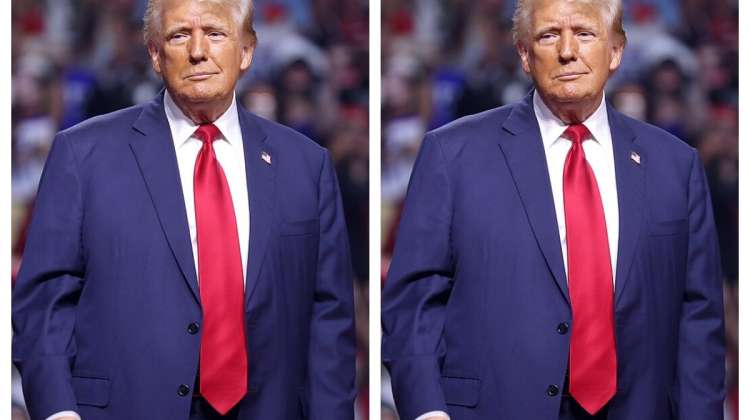
U.S. opens refund path after Supreme Court strikes down Trump tariffs
Businesses that paid import duties later struck down by the courts can now begin the long process of getting that money back, with a federal refund portal going live on April 20.
The system, managed by U.S. Customs and Border Protection, opened at 8 a.m., allowing importers and their brokers to start filing claims online. It marks the first tangible move toward reimbursing billions collected under tariffs the U.S. Supreme Court said were imposed without proper constitutional authority.
While companies are first in line, the implications stretch further. Some consumers who ultimately bore the cost of those tariffs through higher prices could also see refunds down the road, though that path remains uncertain and likely slow.
READ ALSO: Federal judge unlocks billions in refunds after Supreme Court voids Trump tariffs
To begin, businesses must submit detailed declarations identifying the goods tied to the invalidated duties. Once approved, refunds are expected within 60 to 90 days, according to the agency. Even so, the rollout is staged. Authorities plan to prioritize more recent payments, and administrative hurdles could stretch timelines further, meaning any benefit passed on to customers will take time to materialize.
Early users ran into friction. A Washington, D.C.-based clothing company co-owner described difficulty setting up an account, while a Northern Virginia attorney said some clients experienced lag and delays on the portal.
The refund effort follows a 6-3 ruling by the U.S. Supreme Court, which found that Donald Trump overstepped Congress’ authority when he introduced sweeping import taxes last April. The measures were justified at the time under a 1977 emergency powers statute, citing the U.S. trade deficit as a national emergency.
Although the justices did not directly address repayments, the U.S. Court of International Trade later ruled that companies affected by tariffs under the International Emergency Economic Powers Act were entitled to refunds.
Court filings from Customs indicate the scale involved: more than 330,000 importers paid roughly $166 billion across over 53 million shipments. The first phase of refunds will not cover all of those cases. Eligibility is currently limited to entries where duties were estimated but not finalized, or those still within 80 days of final accounting.
Accessing refunds also requires enrollment in the agency’s electronic payment system. As of April 14, 56,497 importers had registered, representing about $127 billion in potential refunds, including interest.
Legal and accounting experts are urging caution. Meghann Supino, a partner at Ice Miller, emphasized the need for precision when compiling documentation.
“If there is an entry on that file that does not qualify, it may cause the entire entry to be rejected or that line item might be rejected by Customs,” she said in an AP report.
She also warned that patience will be essential as the system stabilizes.
READ ALSO: Trump administration opens new trade probe to revive tariffs after Supreme Court setback
“Like any electronic online program that goes live with a lot of interest, I would expect that there might be some hiccups with the program on Monday,” she said. “So we continue to ask everyone to be patient, because we think that patience will pay off.”
Nghi Huynh of Armanino noted that many companies will be dealing with mixed shipments, where only some items qualify.
“It’s about having a clear process in place and keeping track of what’s been submitted and what’s been paid, so nothing falls through the cracks,” she said. “Each file can include thousands of entries, but accuracy is critical, as submissions can be rejected if formatting or data is incorrect.”
For smaller firms, the process has been highly anticipated, even if early attempts proved frustrating. Rebecca Melsky of Princess Awesome said she was unable to complete registration despite trying multiple browsers. Her company, which sources clothing from Bangladesh, China, India and Peru, paid an estimated $32,000 in tariffs.
“My expectations have been pretty low about whether we were actually going to see any money back to us,” she said. “I’m heartened by the fact that there’s any system at all, but I’m only slightly more optimistic than I was last week, which was not very.”
Some filings did eventually go through. Justin Angotti of Reed Smith said clients managed to submit declarations successfully after repeated attempts.
“So far, Customs has been very responsive in trying to troubleshoot the issue,” Angotti said.
Because tariffs are initially paid by importers, any refunds will go directly back to those businesses. They are not required to pass the money on to customers, even if the costs had been built into retail prices.
That has already sparked legal action. Class lawsuits targeting companies such as Costco and eyewear giant EssilorLuxottica are moving through U.S. courts, seeking to compel reimbursements for shoppers.
Delivery firms may offer a more direct route for individuals. Carriers like FedEx and UPS, which sometimes collected tariffs directly from customers, have indicated they will return funds once reimbursed by the government.
READ ALSO: EU demands clarity after U.S. court sinks Trump tariffs
“Supporting our customers as they navigate regulatory changes remains our top priority,” FedEx said in a statement. “We are working with our customers as CBP begins processing refunds and plan to begin filing claims on April 20.”
