
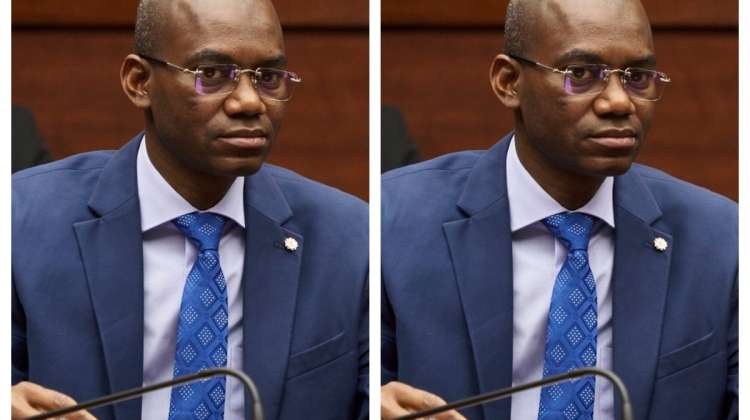
Mali crisis deepens as defence chief reported killed in wave of rebel attacks
Mali has been jolted by reports that its defence chief, Gen. Sadio Camara, is dead following a wave of coordinated assaults that saw armed groups overrun key locations, including parts of the capital.
Sources within the military and civil society say the minister was killed when attackers struck his residence, though authorities in Mali have yet to publicly confirm the development.
“Unfortunately, the Ministry of Defense, Gen. Sadio Camara, has been killed during the attack which targeted his house yesterday,” said a military official who spoke on condition of anonymity because he did not have permission to speak to the media, according to the AP.
READ ALSO: Militant attacks force Mali into fuel rationing
Two additional sources, including a civil society figure and a security officer, backed the account.
The reported killing comes amid one of the most extensive offensives in recent memory. On Saturday, separatist fighters and Islamist militants launched near-simultaneous strikes across Bamako and other cities, leaving at least 16 people injured.
For years, northern Mali has been a battleground for Tuareg separatists seeking independence and jihadist factions linked to al-Qaida and the Islamic State group, both of which have waged a prolonged insurgency against the state.
In the aftermath of the latest attacks, rebels claim government troops and Russian fighters pulled out of Kidal. A spokesperson for the Tuareg-led Azawad Liberation Front said the withdrawal followed an agreement allowing safe passage out of the city.
“Kidal is declared free,” said FLA spokesperson Mohamed El Maouloud Ramadan.
While the army has not directly addressed the reported pullout, it earlier stated that forces were “tracking down terrorist armed groups in Kidal.”
Kidal has long held symbolic and strategic weight in the conflict. Once a rebel stronghold, it fell to Malian forces and their Russian allies in 2023, a development widely viewed as a turning point for the ruling junta.
Saturday’s offensive also marked an unprecedented alignment on the battlefield. Separatist factions fought alongside JNIM, an al-Qaida-linked coalition that claimed responsibility for attacks targeting Bamako’s international airport and several other cities, including Kidal.
“This operation is being carried out in partnership with the JNIM, which is also committed to defending the people against the military regime in Bamako,” Ramadan said.
Analysts say that level of coordination signals a shift. Wassim Nasr, a Sahel specialist and senior fellow at the Soufan Center, noted that both the operational planning and the political messaging were unusually aligned.
“The coordination, conducting attacks all over the country at the same time, real coordination on the military level but also on the political level because both claims of both groups they acknowledged that they worked together, this is a first,” said Nasr.
Government spokesperson Gen. Issa Ousmane Coulibaly told state television that 16 people, including civilians and soldiers, were wounded in the attacks and that several militants were killed, though he stopped short of giving a death toll.
Authorities in Mali have since imposed a nightly curfew, with the governor of the capital’s district, Abdoulaye Coulibaly, announcing restrictions from 9 p.m. to 6 a.m. over three days.
Regional leaders have reacted with alarm. The Economic Community of West African States condemned the violence and urged a united response across the subregion to confront the growing threat.
Separatist groups, meanwhile, are pressing Russia to rethink its backing of Mali’s military rulers, arguing that the alliance has deepened civilian suffering.
Since a series of coups, Mali, alongside Niger and Burkina Faso, has shifted away from Western partners and toward Russia for security support. Despite that pivot, militant attacks have surged, and government forces have faced repeated accusations of targeting civilians suspected of aiding insurgents.
The current escalation follows a pattern of intensifying violence. In 2024, an al-Qaida-linked group claimed responsibility for a deadly assault on Bamako’s airport and a military training facility that left dozens dead.
Ulf Laessing of the Konrad Adenauer Foundation said the latest developments cast doubt on the effectiveness of Russian involvement, though he does not see militants capturing the capital anytime soon.
READ ALSO: Mali, Burkina Faso hit back at U.S. with entry ban on Americans
“The attacks are a major blow to Russia as the mercenaries had no intelligence about the attacks and were unable to protect major cities. They have unnecessarily worsened the conflict by not distinguishing between civilians and combatants,” Laessing said.
