
Grange doubles down on claim Rastafarians’ rights are protected in Jamaica
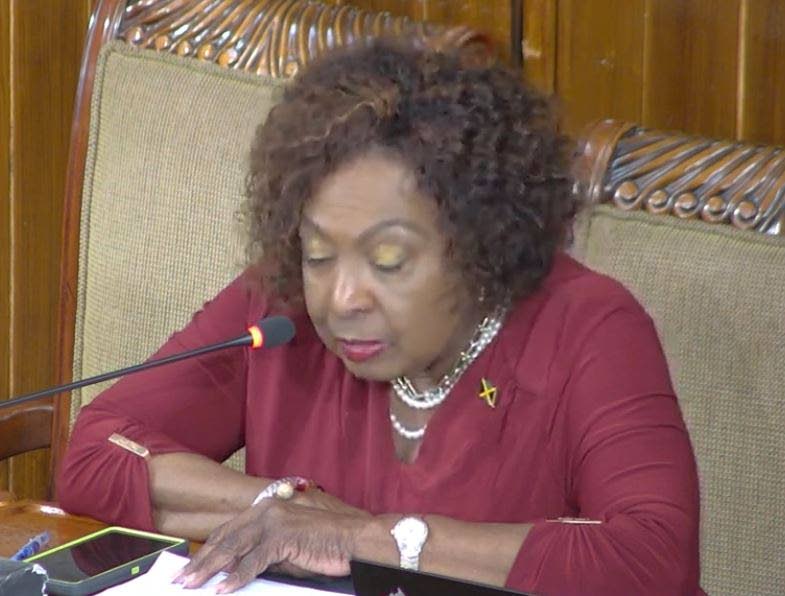
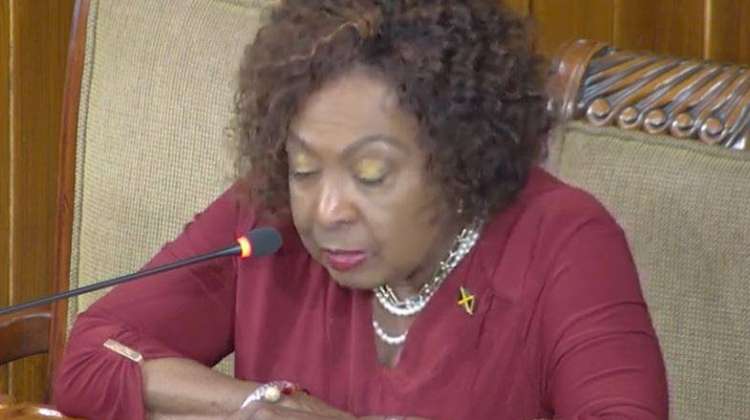
A screen grab of Culture Minister Olivia Grange addressing a meeting of the joint select committee reviewing the Green Paper on the National Policy for Culture, Entertainment and the Creative Economy, on Thursday.
Culture Minister Olivia Grange has doubled down on the Government’s position that Rastafarians rights are already protected under Jamaican law, rejecting criticism from the Rastafari Mansions and Organizations (RMO).
According to Grange, members of the Rastafari faith enjoy the same constitutional rights as other religious groups.
Speaking on Thursday during a meeting of the joint select committee reviewing the Green Paper on the National Policy for Culture, Entertainment and the Creative Economy, Grange said recent public discussions had created a misleading impression that Rastafarians lacked recognition or equal protections under the law in Jamaica.
“There has been several comments in the newspapers recently on Rastafari and what Government is doing or is not doing and if we have recognised Rastafarians…and if they have the same rights as any other religion, and I just want to place on record that they do have the same rights,” Grange said.
The minister maintained that those protections are guaranteed under Jamaica’s Charter of Rights, as she argued that the current Administration has done more than any previous Government to support and embrace the Rastafari community.
Grange also pointed to the Government’s $176-million contribution to the Coral Gardens Benevolent Fund, established following the State’s apology for the 1963 Coral Gardens atrocity against Rastafari.
Her comments came days after the RMO accused the Government of overstating the legal protections afforded to Rastafari and renewed calls for a comprehensive Rastafari Rights and Justice Act to address what it described as systemic discrimination.
The issue has gained renewed attention following legislation in St Kitts and Nevis formally recognising Rastafari, including provisions relating to sacramental rights, identity, and economic concessions, prompting comparisons with Jamaica’s legal framework and fresh calls from the RMO for explicit constitutional recognition.
In its statement released on April 21, the RMO argued that constitutional guarantees of religious freedom do not amount to formal legal recognition of Rastafari as a distinct faith and indigenous cultural group.
The organisation said the absence of explicit protections has allowed discrimination and inconsistent enforcement to persist across policing, education, employment, and health care.
The group also accused the Government of failing to adequately support Rastafari communities affected by Hurricane Melissa, saying relief efforts did not sufficiently account for their dietary, cultural, and health practices.
It further cited several recent ganja-related cases, arguing that Rastafari sacramental rights continue to be inconsistently applied despite amendments to the Dangerous Drugs Act.
Grange, however, signalled that the Government remains open to broader discussions on Rastafari and its place within Jamaica’s legal and cultural framework.
“I would invite full discussion on Rastafari as a religion and to look at the history to see what has been done in this country and to chart a path forward, and even further embracing and recognising the importance of Rastafari,” she said on Thursday.
