
From PEP to peril – Jamaica Observer
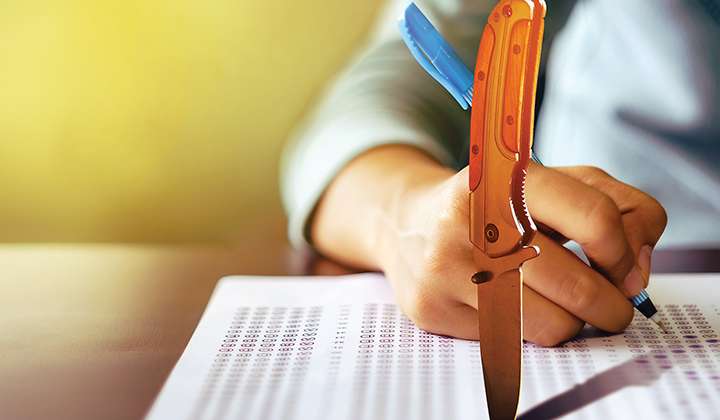
As parents, teachers, and administrators gathered at schools to usher students in to sit the Primary Exit Profile (PEP) grade six examinations last week, they worried not only about how the children would transfer the knowledge learnt but also about their transition to higher learning as concern for their safety increases amid reports of violent incidents in high schools across Jamaica.
From the fatal stabbing of a Seaforth High student by another student after a dispute escalated off campus to a viral video showing Jamaica College students assaulting a peer, the violence among schoolchildren has been the talking point for many. Both incidents have been condemned by the Ministry of Education, which reaffirmed its zero-tolerance stance on violence and its commitment to maintaining safe school environments.
However, the reassurance has done little to squash concerns among caregivers.
On the morning of the PEP assessment last Thursday, parents and administrators at primary schools in Portmore, St Catherine, told the Jamaica Observer that ongoing violence in high schools makes them uneasy, and they are praying their children will not be affected. Some parents said they are also becoming more intentional about the high schools they select, weighing not just academic performance but also level of safety.
A grade six student preparing for his transition to high school, Liam Richards, begged students to stop the bullying and violence in schools to create a safer learning environment, sharing that he is already preparing himself mentally.
GRANT SWABY…it is heart-wrenching to see some of the things that happens in school (Photos: Karl Mclarty)
Reverend Dr Alvin Bailey, chairman of Kensington Primary, voiced concern that high school violence and bullying are not being adequately addressed. He urged school leaders to disclose incidents, instead of trying to protect their reputations, so appropriate measures can be taken. Bailey also touched on violence against teachers, noting it is an area that needs to be addressed.
A breakdown of data obtained by the Sunday Observer from the National Children’s Registry — a division of the Child Protection and Family Services Agency (CPFSA) — shows that 49 incidents of bullying were reported between January 1 and March 26 this year and, of that amount, the highest number was recorded in January with 22 cases, followed by 11 in February and 16 in March.
Additionally, a total of 55 critical incident reports, mostly related to violence in schools, were reported, as required, to the Ministry of Education and Youth between January 2022 and January 2023. The Jamaica Violence Against Children and Youth Survey (VACS) 2023 further revealed that among children 13 to 24 years old who attended school, about one in four females and one in three males knew of gang activity in their school.
For Janice Richards, the parent of a grade six student, the reality is alarming, leading to constant panic about her son’s transition. She shared that her son does not have a violent nature, but has a medical history with seizures that could be triggered if someone attacks him.
“They always tell you that when you’re going into high school you are going to get [roughing up], but I think nowadays these kids are taking it to a different level,” she told the Sunday Observer.
ANDERSON…to some extent parents are saying, ‘I don’t want my child to go to that school because of what I am seeing in the news’
As a preventive measure, she said she has eliminated schools with a history of violence from her list of options for her son, hoping this will reduce his risk of encountering such incidents.
“I’m not saying things like those don’t happen at other schools, but you can look and see which ones are more likely to give your child a good experience that doesn’t have all of the fighting and fussing and reports coming out,” she reasoned.
A grade six teacher at Greater Portmore Primary, Mario-Lyn Anderson, said many parents at her institution have also taken similar steps.
“To some extent, parents are saying, ‘I don’t want my child to go to that school because of what I am seeing in the news or because of what I have known over the years,’ so with school selections parents were very careful in how they selected their schools. Based on what they know now, they were saying, ‘Well, I’m glad I never chose that school because of what we’re seeing in the news,’ ” she said.
Anderson said she also holds concern for her students, noting that while some have a strong mind and can stand up for themselves, others are more vulnerable and sheltered, making the anticipated transition to high school particularly worrying.
Describing himself as a quiet child who typically stays in the background, 11-year-old Liam said his move to high school may prompt him to become more assertive in an effort to avoid being targeted by bullies.
Principal of Kensington Primary, Christine Hamilton.
“I haven’t been in fights, but I am sure that if someone tried to bully me I would change, because in primary school I wouldn’t fight because I don’t really confront people, but since I’m going to high school I have to toughen up, so I would probably change my personality a bit,” he reasoned.
He said he has seen videos of what is happening in high schools, and that guidance counselling sessions have helped him understand that some children bully or act out because of trauma; however, he noted that their experiences do not justify such behaviour.
“I think they should stop so it doesn’t turn into this big thing that schools lose their reputation for,” he said, adding that putting an end to violence would also make schools safer for students.
He acknowledged that children who are bullied might feel the need to fight back, but urged them to fight back in different ways.
“You can go to the principal, or you can beat them in subject areas and be the best of the best,” he encouraged.
According to Article 19 of the United Nations Convention on the Rights of the Child, of which Jamaica is a signatory, children have the right to be protected from all forms of violence, including bullying, physical, and mental abuse. Bullying violates fundamental rights to education, health, and dignity, requiring states to take legislative and social measures to prevent it, support victims, and ensure a safe, inclusive environment.
Warren Walford, a member of Ascot Primary School’s Parent-Teacher Association and a parent of a student who sat the recent assessment, highlighted the importance of instilling good values in children, encouraging parents to act before it is too late.
BAILEY…I’m not convinced that the high schools are doing all to contain and to eradicate violence out of the schools
“Out there is a brutal world. Oftentimes we hear of mishaps happening in high schools, and so as parents we tend to be a little bit worried where that is happening. We have to just educate our children and ensure that they stay on the right path and be their friends so that they can come to you and talk to you freely about anything that they are not comfortable about, and then, as we go along, we can make the necessary changes and adjustments,” he said.
Parents Ricardo Duckett, whose child attends Ascot Primary, and Kemeshia Grant Swaby, whose daughter attends Kensington Primary, said they have taken up that charge, instilling good morals and values in their children at an early age, and are hoping these values will stay with them as they move on to high school.
The head of a youth group in his community, Duckett said he hosts regular events, encouraging his child and other children to be the best versions of themselves.
“For me, as a parent, I do the best possible to teach him the right way, teach him not to be a bully, teach him not to stand for bullying. I tell them, ‘If someone is bullying you, the first thing to do is to go to the teacher or the principal and make it be known that this is happening,’ ” he said.
For Grant Swaby, her approach for her daughter is grounded in Godly practices.
“I know she is grounded in her faith, and I’m just hoping that transitioning to high school she will maintain that and not get caught up with some kind of friends that will lead her astray,” she told the Sunday Observer.
She added that, “It is heart-wrenching to see some of the things that happen in school and that is something we are concerned about, but at the end of the day we are aware that everything happens according to God’s plan and so we keep grounded in faith to know that she will be protected and we continue to pray for God to be with her on that journey.”
Acknowledging parents’ concerns at her institution, Kensington Primary Principal Christine Hamilton noted that incidents of bullying and gangs are not just limited to high schools and are also present in primary schools.
Of the 55 critical incident reports mostly related to violence in schools received by the ministry in January 2022 and January 2023, a total of 15 incidents occurred at primary schools and 35 at high schools.
Hamilton said her institution has been working closely with parents and teachers to address behavioural challenges among youth, stressing that early detection is a priority to curb these issues before students transition to higher levels of education.
“The parents are nervous, and so we have Zoom sessions. We have parents who we have sessions with and talk to them, to talk [to children] about how they behave or how they should operate when they go into these high schools and what they do. We are just trying to really prepare them for that transition to make sure that everything is okay,” she told the Sunday Observer.
The Ministry of Education has also taken action to combat incidents of violence and bullying in schools. In October last year it launched BullyProofJA, a digital campaign aimed at tackling the devastating impact of bullying in schools and communities across Jamaica.
Interventions are also guided by the Safety and Security Policy, which involves counselling at-risk individuals; developing crisis and emergency plans; assigning roles for students, parents, and the community; and addressing and resolving conflicts in a constructive manner. In addition, school resource officers have been assigned to schools to manage violence, truancy, and antisocial behaviour under the Safe Schools Programme.
However, Reverend Bailey said he does not believe enough is being done at the high school level to combat the issue of violence in schools.
“I’m not convinced that the high schools are doing all to contain and to eradicate violence out of the schools, because they are trying to protect their reputation and maybe their supporters, and because of that they hide the practices and the deviances that are taking place in the high schools, especially the negative practices,” said Bailey.
“They hide that in order to maintain a reputation in the school and not to give a bad impression, but there’s more. We are just hearing a tip of the iceberg of the indiscipline taking place in the high schools, we know that for sure,” he added, calling on all stakeholders to have the will to tackle the root cause.
He stressed that these incidents cannot continue to be hidden and must be exposed to drive consistent policy interventions.
“Every now and then something comes up and there’s a knee-jerk effect, and there’s an excitement about it, and it goes back to normal as soon as the seven-day wonder has passed, but no consistent or new policy to curtail indiscipline in the high school,” he said, demanding change.
He further noted that violence against teachers in high schools is also another pressing issue that needs to be addressed, stating that in some instances he has heard of teachers staging sit-ins in protest.
Anderson said that, as an educator, she has heard of instances in which teachers have been attacked by students and called for established protocols on how these matters can be handled.
“A lot has not been said about how we, as teachers or educators, act. What’s the right channel to go through when this is happening? As a teacher, what do I have to do or what shouldn’t I do so that I am not in the wrong, but I still ensure that the students’ well-being is at the forefront?
“If a student is attacking a teacher and the teacher attacks the student, or defends himself or herself, the first thing is that you are an adult, you should walk away, but nobody is going to remember that teachers are human beings. What is the proper channel I should go through as an educator when I am being attacked? What should I do, because if I walk away, they will say, ‘Miss is soft, so I can fight Miss and she doesn’t do anything.’ If you retaliate, then you are a bad teacher, and then the admin or the ministry comes down on me to say that I shouldn’t hit them…What should we do?” she questioned.

Data shows that 49 incidents of bullying were reported between January 1 and March 26 this year.
