
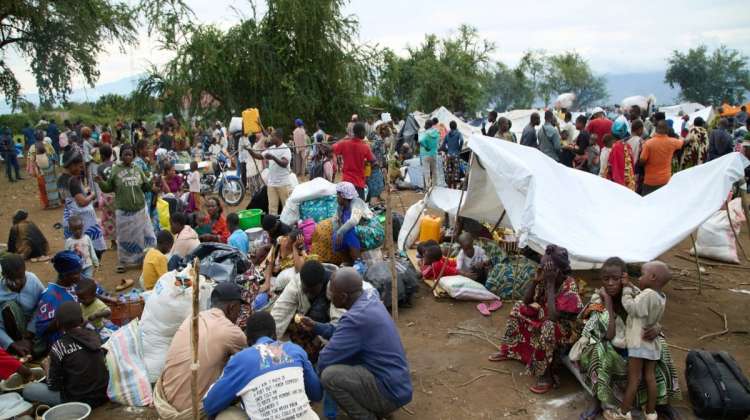
Congolese refugees begin mass return from Burundi as calm slowly returns to the border
Thousands of Congolese refugees who had been sheltering in Burundi are now making their way back across the border into eastern DR Congo, following the pullback of Rwanda-backed M23 fighters from a strategic town.
The most recent group included about 470 people who crossed back after spending nearly four months displaced by fighting around Uvira. They had taken refuge at the Busuma camp in Burundi’s Buhumuza Province and form part of a wider wave of returns. The United Nations says at least 33,000 Congolese have gone home since March.
The movements come after M23 rebels, who had taken control of large stretches of North and South Kivu near the Rwandan border, withdrew from Uvira further south following sustained international pressure.
READ ALSO: Congo to take in U.S. deportees under Trump’s third-country plan
U.S. President Donald Trump has positioned himself as a central broker in renewed diplomatic efforts, as Washington pushes for a lasting ceasefire between the two countries. The initiative is also tied to broader U.S. strategic interest in Congo’s vast mineral resources, which are essential for global industries ranging from aerospace to consumer electronics.
On Thursday, officials supervised a formal repatriation exercise involving representatives from the Congolese Embassy in Burundi. For many of those returning, the departure from Busuma marked relief after months of strained conditions marked by food and supply shortages.
The UN refugee agency says the returns will continue for several weeks, with at least two organised bus convoys planned each week to transport people home safely.
“I am happy, very joyful,” said Hassan Masemo, one of the returnees, adding that he was grateful to Burundian authorities for “reopening the border for us.”
According to the UNHCR, Burundi is currently hosting more than 200,000 Congolese refugees, including about 66,000 at Busuma camp alone.
READ ALSO: Congo declares end of Mpox outbreak after two years and 2,200 deaths
The camp was set up in December 2025 to accommodate civilians fleeing the rebel advance on Uvira, an escalation that also led Burundi to shut the Gatumba border crossing. The crossing has since reopened after M23 forces pulled out of the area.
“This is being done only for those who are going straight to their homes, because for areas which are not yet safe for return, we are not going to organize the return,” Brigitte Mukanga-Eno, the UNHCR representative in Burundi, said in an AP report.
She added that as government authority was gradually restored in Uvira, some refugees began returning on their own in March, encouraging others to follow.
Eastern Congo, a region rich in minerals, has endured years of instability driven by more than 100 armed groups. M23 remains the most powerful among them, fueling ongoing cycles of displacement and violence.
Rwanda and M23 have denied claims of Rwandan military involvement in the conflict, despite United Nations experts reporting evidence suggesting otherwise. Rwanda maintains that its actions are defensive, aimed at preventing threats from Hutu militias linked to the 1994 genocide in the country.
READ ALSO: Eastern Congo war intensifies as drone strikes and heavy firepower surge – UN reveals
