
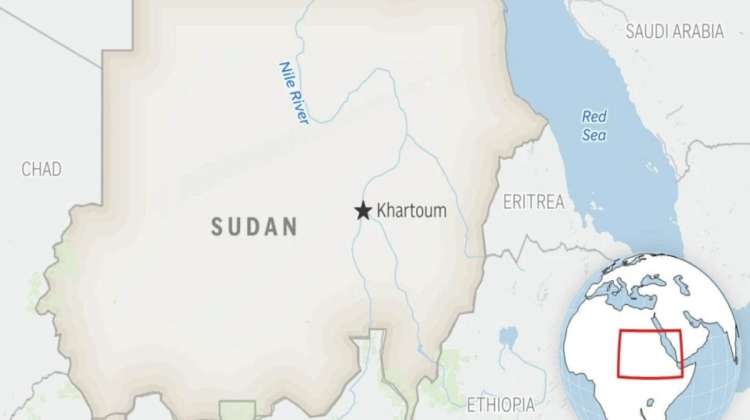
Rural Sudan faces growing medicine shortages amid Iran conflict
In Qoz Nafisa, a village on the outskirts of Sudan’s capital, access to basic medicine was never guaranteed. Now, it is slipping even further out of reach.
Managing glaucoma has become a daily calculation for 61-year-old Abbas Awad. He stretches out his medication, unsure when he will find it again or whether he will be able to pay for it if he does. The strain of Sudan’s own conflict had already made life difficult. A new crisis beyond its borders has tightened the pressure.
“Now we have the problem of the war in the Middle East. It’s just made things worse,” he said.
The ripple effects of the Iran conflict are being felt far from the frontlines, compounding emergencies in countries already under strain. In Sudan, where war has dragged on for three years, health facilities are buckling under shortages and rising demand.
READ ALSO: Libya named in U.N. report as key conduit for Colombian mercenaries fueling Sudan war
At a public clinic in Qoz Nafisa, thousands depend on limited supplies that are becoming harder to replenish. Aid organizations say disrupted shipping routes have slowed the movement of essential goods, cutting off critical lifelines.
The standoff between the United States and Iran has effectively choked the Strait of Hormuz, a key artery for global trade. Alternative routes through hubs like Dubai have also been affected, forcing aid groups to reroute deliveries at higher cost and with longer delays.
According to the United Nations, shipment expenses have climbed by as much as 20 percent, driven by rising fuel prices and insurance premiums. Deliveries are taking longer as cargo is redirected through less direct paths.
For organizations working on the ground, the consequences are immediate. The International Rescue Committee says pharmaceuticals worth about $130,000, meant for Sudan, sat stranded in Dubai for weeks before finally moving again.
Supplies that would normally be flown directly to Port Sudan have had to travel overland to Oman before being airlifted, adding time and complexity to an already fragile supply chain.
Although U.S. President Donald Trump has extended a ceasefire with Iran, aid workers say the disruption will not ease quickly.
“There’s still a real lag in the system. Shipments remain blocked or delayed, and that’s deeply worrying,” said Madiha Raza, associate director for global public affairs and communications for IRC.
Sudan is widely described as facing the world’s most severe humanitarian crisis. In that context, even minor delays can have outsized consequences, particularly for communities already cut off from consistent care.
At the Qoz Nafisa clinic, which serves around 5,000 people, shortages are forcing patients to look elsewhere for treatment, often paying out of pocket despite having little to spare.
READ ALSO: MSF reveals sexual violence is being weaponized in the Sudan conflict
When Associated Press journalists visited the facility on Wednesday, staff said demand has surged since the Iran conflict escalated in late February, while supplies have dwindled.
For security reasons, a member of the military media accompanied the reporting team. The Associated Press indicated that it maintained full editorial control.
Dr. Amira Sidig, the clinic’s medical director, said the last delivery from the IRC arrived in December. Shipments expected in February and April have yet to come through.
Sudan’s health ministry has tried to bridge the gap, but its support covers only about half of the clinic’s needs.
“It’s never enough because they also have a shortage, and we’re again out of stock quickly,” she said.
The shortages are already affecting care. For several days this month, the clinic had no malaria treatment available, despite half of its patients presenting with the disease.
Staff say frustration is growing among those seeking help. Ahmed Ibrahim, who works at the clinic, said the pressure is visible at the front desk.
“When people come to the window, they say, ‘Why are you here and there is no medicine?’”
READ ALSO: U.S., UN lead massive $700M humanitarian surge for conflict-ravaged Sudan
