
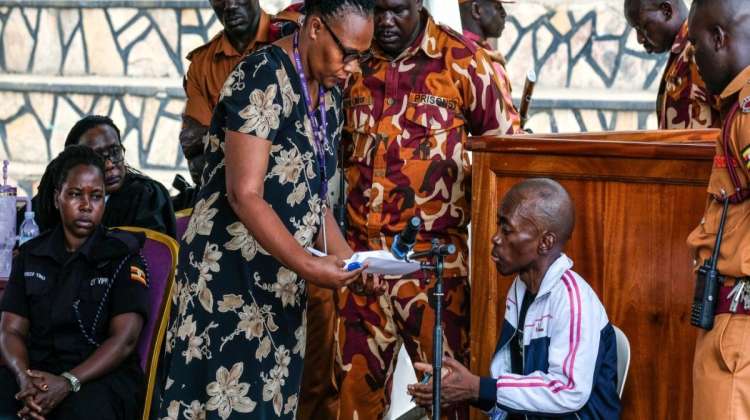
Uganda’s swift trial ends in death sentence for man who killed four children
A swift court process in Uganda has ended with a death sentence for a man convicted of killing four young children at a nursery, after judges dismissed his claim of mental instability.
The Thursday ruling triggered an immediate reaction from onlookers gathered under a tent, where cheers broke out as the judge declared that Christopher Okello should “suffer death” for the April 2 killings that shook the country.
In dismissing the defense, the judge stated that the accused “failed to adduce any evidence to support this claim that he was not mentally okay” when he carried out the act.
READ ALSO: Uganda sweeps up 231 foreign nationals in crackdown on suspected trafficking ring
Prosecutors identified Okello, 38, as the man behind the deadly machete assault at a nursery located in a Kampala suburb. Accounts from witnesses painted a calculated entry, saying he posed as a parent to gain access. Once inside, he reportedly engaged staff briefly before securing the premises and turning on the children.
The case was expedited under instructions from President Yoweri Museveni, who directed that proceedings be handled through “mobile courts.” These open-air sessions, held outside traditional courtrooms, allowed large crowds including grieving families to follow the trial in real time.
Despite the swift process, questions lingered over the suspect’s mental condition. Observers noted erratic behavior during hearings, including bouts of unexplained laughter. The Uganda Law Society criticized the proceedings, calling the trial “a judicial lynching rally.”
According to a report by the AP, judicial authorities rejected that characterization, insisting the approach reflected their “commitment to taking justice closer to the people through innovative approaches.”
READ ALSO: Uganda receives first 12 U.S. deportees as lawyers raise alarm
Although capital punishment remains on the books in Uganda, executions are infrequent. Many inmates sentenced to death spend prolonged periods in custody without the sentence being carried out.
