
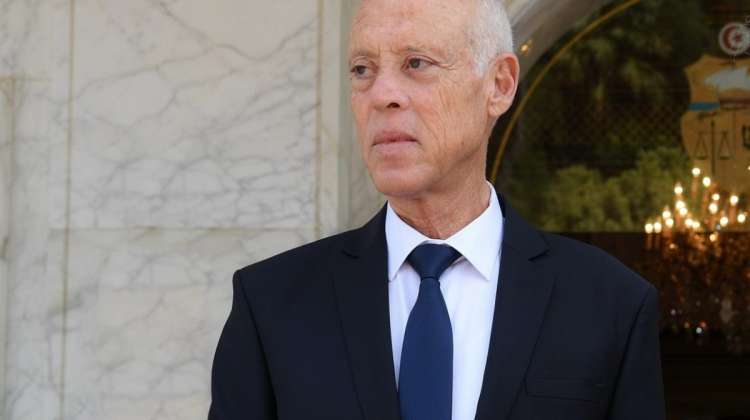
Tunisia suspends historic rights group as civil society pressure intensifies
Tunisia’s authorities have imposed a one-month suspension on the Tunisian League for Human Rights, a long-established rights organization in Africa and the Arab world and a member of the National Dialogue Quartet that won the 2015 Nobel Peace Prize.
The league confirmed the decision in a statement released late Friday, describing it as “a serious and arbitrary violation of freedom of association” and “a direct assault” on one of Tunisia’s key democratic gains.
President Kais Saied has repeatedly pointed to foreign funding, often relied upon by rights organizations, as a national threat. Critics say he has used this argument to advance a populist narrative while accusing political opponents and civil society actors of acting as foreign agents and inciting instability.
READ ALSO: Tunisia protesters rally against Saied’s tightening grip on freedoms
The organization said, “This measure cannot be seen in isolation from a broader context in the country marked by increasing systematic pressure on civil society and independent voices,” adding that it would contest what it called an unjust ruling in court while continuing its work defending victims of rights violations without discrimination.
The move is part of a wider pattern of restrictions on rights groups in Tunisia. Last year, courts ordered several prominent NGOs to suspend activities for a month, including organizations working on migrant and women’s rights.
Tensions have also risen in the media space. Journalist Zied El-Heni was detained for 48 hours over a Facebook post, reflecting what critics describe as a growing use of arrests and legal action against government opponents.
Speaking at a protest in Tunis on Friday, Mohamed Yassine Jlassi, former head of the Tunisian journalists union SNJT, said detentions over speech-related accusations have become widespread, including cases linked to social media activity.
READ ALSO: Tunisians rally against Saied’s rule on anniversary of power grab
“Repression has come to affect everyone. Journalism has become a crime, civil society work has become a crime, political opposition has been criminalized,” he said, according to a report by the AP.
“People now increasingly find themselves facing arbitrary prosecutions without the bare minimum guarantees of a fair trial.”
In a separate development, investigative outlet Inkyfada is due in court on May 11, while authorities are also pursuing legal steps to dissolve Al Khatt, the association that publishes it.
The organization has rejected the basis of the case, stating that the allegations cited by the government have not been reviewed by Tunisian courts since 2024.
These events have deepened concerns among rights groups about tightening restrictions on independent media, civil society organizations and dissent under Saied, who has consolidated authority since 2021 and increasingly accuses critics of receiving foreign backing to fuel unrest and undermine Tunisia’s national interests.
