
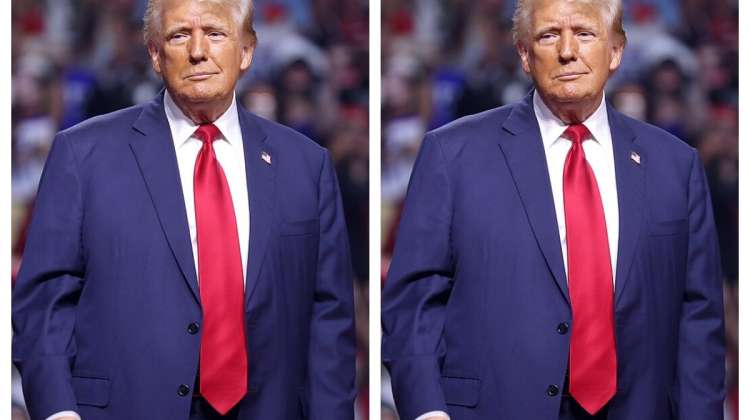
Trump slams judge as court blocks key work on $400m White House ballroom project
A courtroom fight over a proposed White House ballroom is escalating, with President Donald Trump lashing out after a federal judge kept key parts of the project on hold while allowing security-related work underground to continue.
In a decision issued Thursday, U.S. District Judge Richard Leon drew a line between what can move forward and what cannot on the $400 million plan. Above-ground construction of the 90,000-square-foot ballroom remains blocked, but excavation and work tied to bunkers and other security infrastructure below the surface can proceed.
The ruling follows instructions from a federal appeals panel that asked Leon to revisit his earlier order and spell out how national security concerns factor into halting the project. The site in question sits where the East Wing of the White House once stood, after its demolition cleared space for the planned venue.
READ ALSO: Judge says Trump can’t build ballroom under blanket security claim
Trump reacted angrily online, targeting Leon, who was appointed by former President George W. Bush, accusing him of bias and obstruction. “Trump Hating” judge who “has gone out of his way to undermine National Security, and to make sure that this Great Gift to America gets delayed, or doesn’t get built.”
The administration has already signaled it will keep fighting, filing notice of plans to seek another review from the U.S. Court of Appeals for the District of Columbia Circuit.
Opposition to the project remains firm. Carol Quillen, president and CEO of the National Trust for Historic Preservation, said the group welcomes the court’s latest decision. The organization is behind the lawsuit challenging the ballroom’s construction.
Leon’s order carves out a clear exception for security-related work. Government lawyers have maintained that parts of the project are essential to protecting against threats such as drones, ballistic missiles and biological hazards. The judge acknowledged those concerns but said they do not justify proceeding with the entire build.
His earlier ruling on March 31 had already barred above-ground work without congressional approval, while exempting construction tied directly to White House safety. After reviewing classified material submitted by the government, Leon concluded that pausing visible construction would not compromise national security.
To allow further legal maneuvering, Leon temporarily paused enforcement of his latest order for a week, giving the administration time to consider taking the matter to the Supreme Court.
READ ALSO: Trump’s White House ballroom secures final approval amid court-ordered halt
He made it clear the restriction is narrowly focused. Work can continue below ground, including excavations, bunkers, military installations and medical facilities beneath the proposed ballroom. Only the visible structure above ground is subject to the halt, aside from measures needed to secure the site.
“Defendants argue that the entire ballroom construction project, from tip to tail, falls within the safety-and-security exception and therefore may proceed unabated,” the judge wrote. “That is neither a reasonable nor a correct reading of my Order!”
An appellate panel reviewing the dispute said it still lacks enough detail to determine how much of the project can be stopped without putting the president, his family or staff at risk, prompting the latest clarification from Leon.
Even so, the judge pushed back against broad claims of executive authority. He stressed that “national security is not a blank check to proceed with otherwise unlawful activity,” adding that he has “no desire or intention to be dragooned into the role of construction manager.”
Despite the legal setbacks, the project has cleared one key hurdle. On April 2, the National Capital Planning Commission granted final approval for the ballroom, which Trump has said would seat 999 people.
The legal challenge dates back to December, shortly after demolition crews brought down the East Wing to make way for the new structure. Trump has said private donations will fund the ballroom itself, while taxpayer money is being used for the underground security components and upgrades.
READ ALSO: Judge halts Trump’s $400M White House ballroom project amid a legal challenge
